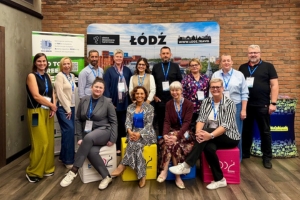
The European project In Transit, led by ATEVAL and in which Tèxtils.CAT has participated as a partner, came to an end on December.
The objective of the project was to strengthen the resilience of European SMEs in the textile, aerospace, construction and advanced manufacturing sectors by creating new products and adopting processes and technologies that support the transition towards greener and more digital business models.
Through cascade funding calls, personalised mentoring and networking opportunities, In Transit has enabled companies to increase their innovation capacities and strengthen their relationship with the European business ecosystem.
The project evaluated 349 proposals received during the two funding calls. In total, 414 SMEs from 26 countries participated, and the 43 best projects were selected.
Spain was the country with the highest number of funded SMEs: 24 of the 61 beneficiaries, followed by Italy with 9, and Austria and Portugal (both with 4). In total, In Transit has awarded more than €2.95 million.
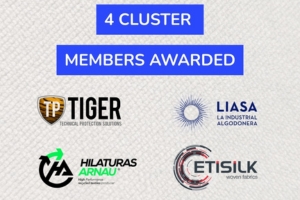
10 Tèxtils.CAT members received support to carry out their strategic green innovation and digitalisation projects to increase their competitiveness: Hilaturas Arnau, Technitiger, Texfire, Torné Grup, and Rosich y Puigdengolas in the first call, and CINPASA, MACCION, RUTEX, FINSA-JOB Group , and Dúctel in the second one.
The members’ initiatives have focused on the most critical challenges in the industry, directly addressing the management of complex waste (such as the revalorisation of technical fibres from firefighter suits, low-quality wool, or multicoloured scraps), improving energy efficiency through the digitalisation of processes like spinning, and developing advanced safety products for new challenges, such as electric vehicle fires.
These solutions not only optimise production processes (reducing defects, costs, and resource consumption thanks to artificial intelligence and monitoring) but also open new transversal market opportunities. They have demonstrated that textile waste can be a valuable resource for the construction or automotive sectors, creating business models based on industrial symbiosis.
Through these tangible actions, the cluster reinforces the industry’s commitment to the European Green Deal, moving from declarations to action and positioning the sector as a leader in the transition towards a truly circular economy.
Tèxtils.CAT highly values the involvement of its members in the different project activities and their success in the funding calls, with grants awarded totalling 490.000 €.
Tèxtils.CAT considers this project a key element for the sector’s resilience and the expansion of its innovation capacity. Clusters act as a meeting point and collaborative environment to facilitate cooperation between companies, research centres, policymakers, and other institutions that promote innovation, providing SMEs with access to new skills, resources, and markets.